
Leaving Isn’t the Finish Line. It’s the Starting Line.
When people picture domestic violence, they often imagine one defining moment.
A survivor leaves.
The police arrive.
A protection order is granted.
The abuser is gone.
The story, they assume, is over.
It's understandable why people think that. Movies end there. News stories end there. Social media celebrates there.
But the reality is much different.
For us at CNADA, that's where the work truly begins.
The Biggest Leap of Faith
Before someone ever leaves an abusive relationship, there are countless invisible moments that no one sees.
The safety plans.
The fear.
The second-guessing.
The promises that things will change.
The threats.
The financial control.
The isolation.
The wondering if anyone will believe them.
Leaving isn't simply walking out the door. It's asking someone to make one of the biggest decisions of their life without knowing exactly what comes next.
In many ways, it's a trust fall.
We spend weeks, months, and sometimes years building that trust.
We tell survivors, "You don't have to do this alone."
Eventually, when they're ready, they jump.
Many people think we've reached the finish line.
The truth is...
We've barely crossed the starting line.
What Happens After Leaving?
Leaving doesn't erase trauma.
It doesn't erase fear.
It doesn't erase years of manipulation, financial abuse, or emotional wounds.
Instead, it introduces a new set of challenges.
Suddenly, survivors are trying to answer questions no one should have to face all at once.
Where will we sleep tonight?
How do I replace everything we left behind?
How do I explain this to my children?
How do I get to work without a vehicle?
How do I pay rent after someone controlled every dollar?
How do I go to court against someone I spent years trying not to upset?
How do I stop looking over my shoulder every time I walk into a grocery store?
For many survivors, the abuse may have ended—but its impact has not.
Leaving is often the first chapter of rebuilding an entirely new life.
Rebuilding Is More Than Crisis Response
At CNADA, we don't simply respond to emergencies.
We walk beside survivors through the long process of rebuilding.
Sometimes that means standing beside someone in court.
Sometimes it means sitting in a hospital room.
Sometimes it means helping complete paperwork for housing, crime victim compensation, or protection orders.
Sometimes it means helping a parent furnish an empty apartment from scratch.
Sometimes it means finding a backpack before school starts, replacing a child's favorite blanket, or helping someone get to work until their first paycheck arrives.
Sometimes it simply means answering the phone at two o'clock in the morning so someone hears the words, "You're safe. We're here."
Recovery isn't measured in days.
Sometimes it takes months.
Sometimes it takes years.
Healing rarely follows a straight line.
Why The Purpose Collective Exists
One question we hear often is:
"Why did CNADA open a thrift store?"
The answer is simple.
Because rebuilding a life requires more than good intentions.
Grants help fund many essential services, but they often cannot pay for the countless everyday needs that arise after someone leaves abuse.
A child who needs new shoes before school starts.
A bed for an empty apartment.
Kitchen supplies for a family beginning again.
Work clothes for a new job.
A birthday gift for a child whose family has lost everything.
Laundry detergent.
Toiletries.
A microwave.
A set of towels.
The list never truly ends.
The Purpose Collective exists to bridge those gaps.
Every donation received.
Every purchase made.
Every volunteer hour given.
Every item shared with a family.
Every one of those moments becomes part of someone's fresh start.
What looks like a thrift store is actually a community-powered resource that restores dignity, stability, and hope.
It allows us to respond quickly, creatively, and compassionately when life doesn't fit neatly inside the rules of a grant.
Our Community Is Part of Every Success Story
One of the greatest lessons we've learned is that survivors do not rebuild their lives alone.
Communities rebuild them.
Every person who donates clothing.
Every customer who chooses to shop locally.
Every volunteer who gives their time.
Every business that sponsors an event.
Every church that partners with us.
Every teacher, healthcare provider, law enforcement officer, neighbor, and friend who chooses compassion over indifference.
You are all part of the story.
You may never know the name of the family you helped.
You may never meet the child who slept in the bed you helped provide.
You may never hear about the parent who finally felt safe enough to dream about the future again.
But your kindness lives in those moments.
Because healing isn't built by one person.
It's built by an entire community choosing to show up.
The Work Doesn't End When the Violence Does
Perhaps the greatest misconception about domestic violence is that safety begins the moment someone leaves.
The reality is that leaving is only the beginning.
Safety is built.
Trust is rebuilt.
Confidence is rediscovered.
Homes are created.
Children heal.
Families begin making new memories.
Lives are pieced back together one day, one decision, and one act of kindness at a time.
That is why CNADA exists.
That is why The Purpose Collective exists.
Not simply to help survivors escape violence—
but to help them build lives where violence no longer defines them.
Because leaving isn't the finish line.
It's the starting line.
And we'll be there for every mile that follows.
How You Can Help
You don't have to be an advocate to make a difference.
You can shop at The Purpose Collective.
You can donate gently used items.
You can volunteer your time.
You can sponsor a community event.
You can share our mission with someone who may need it.
Every act of generosity—no matter how small—helps someone take the next step toward a safer future.
Together, we aren't just helping people leave abuse.
We're helping them build a life beyond it.
Because everyone deserves more than survival. Everyone deserves the chance to truly begin again.
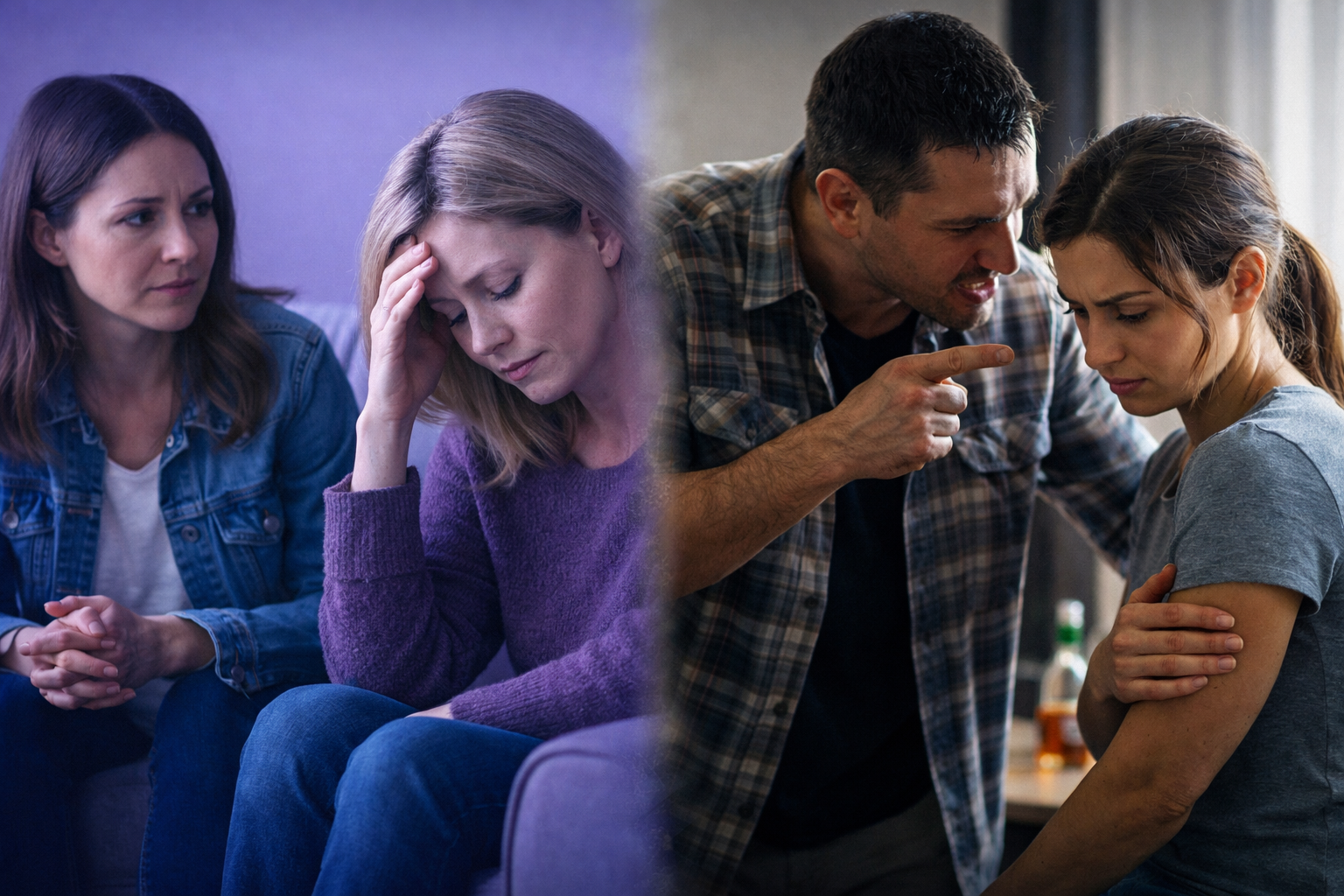
Why Talking About Domestic Violence Makes Us Uncomfortable—But Witnessing It Often Doesn’t
Domestic violence doesn’t begin with visible harm—it begins with behaviors we often explain away. So why do conversations about abuse make us uncomfortable, while the warning signs are easier to ignore? It’s time to confront what we see—and what we choose not to.
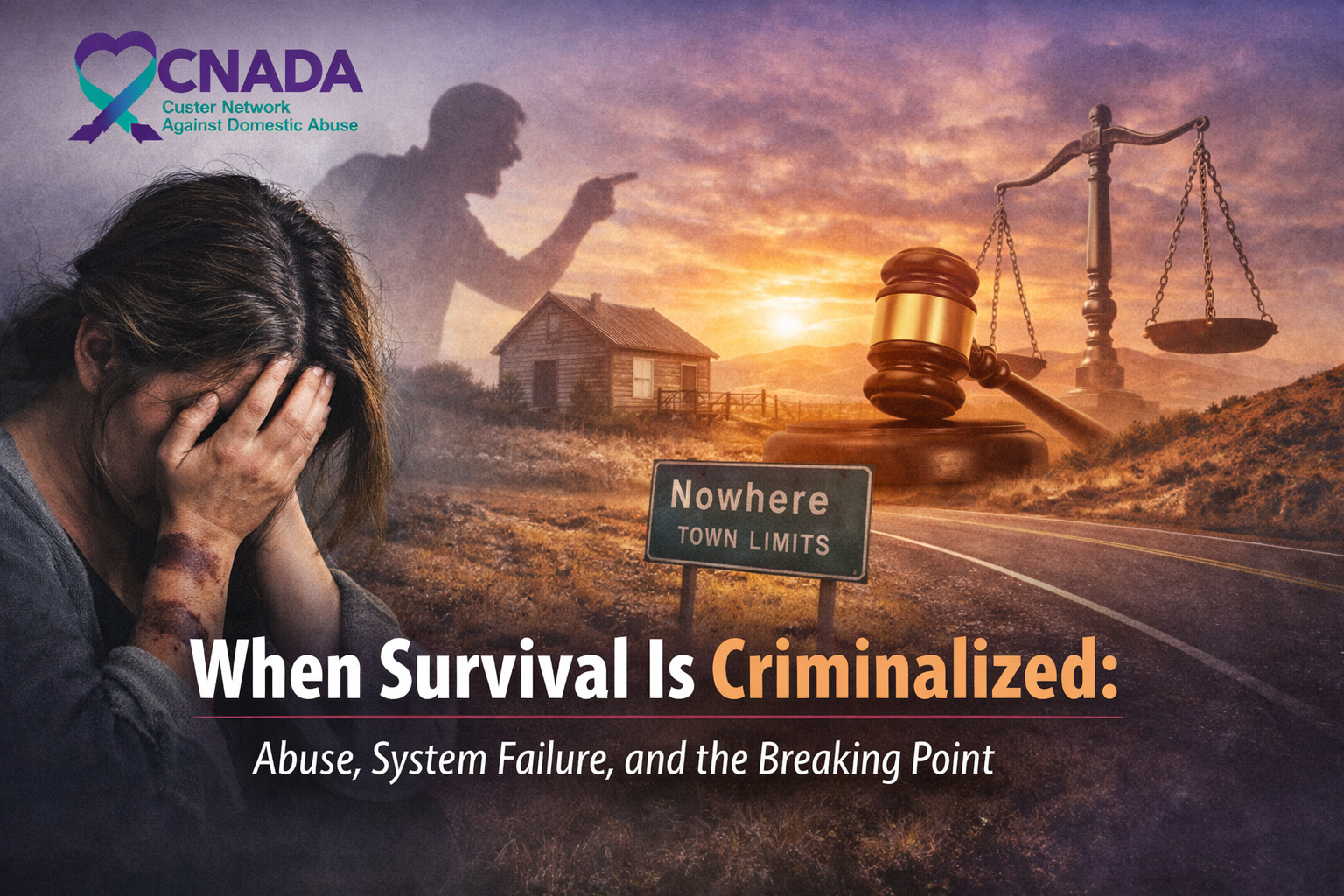
🧡 When Survival Is Criminalized: Abuse, System Failure, and the Breaking Point
In rural Montana, survivors of domestic abuse face isolation, limited shelters, and few economic options. When systems fail, desperation can lead to tragic choices. CNADA — Custer Network Against Domestic Abuse — provides 24/7 support, advocacy, and resources to help victims escape safely and rebuild their lives.
When Headlines Hit Home: Confronting Domestic Violence in Montana
Recent domestic violence cases across Montana are a sobering reminder that abuse is happening in our communities—and the consequences can be devastating. This post reflects on the realities behind the headlines, the unique challenges survivors face in rural areas, and the resources available for those who need help.

Human Trafficking in Eastern Montana: A Hidden Horror and a Call to Action
Human trafficking isn’t just an urban issue—it’s happening in Montana’s rural communities. From labor trafficking on farms to sex trafficking along highways and in motels, survivors are hidden in plain sight. Learn the warning signs, read survivor stories from Billings and Missoula, see the latest Montana statistics, and discover how you can help. CNADA provides critical advocacy, shelter, and outreach across seven eastern Montana counties—and we need your support to keep survivors safe.

Reflection: The Measure of a Community
🌿 “What harms the hive, harms the bees.” — Marcus Aurelius
When the government shuts down, it’s not just politics — it’s people. Families lose access to food assistance, survivors face new barriers to safety, and small nonprofits like CNADA become the only safety net left standing.
At CNADA, we’re committed to filling those gaps through our Community Roots Pantry and survivor support programs — because compassion isn’t partisan, and what harms one of us harms us all.
💜 Your Power, Our Purpose.
#CNADA #CommunityRootsPantry #FoodIsSafety #NoOneLeftBehind #MontanaStrong

“Why Doesn’t She Just Leave?” The Hidden Barriers Women Face—Especially in Rural Eastern Montana
Why Doesn’t She Just Leave?
Leaving an abusive relationship isn’t easy—especially in rural Eastern Montana. Survivors often face isolation, financial abuse, and limited access to transportation or support. In small communities where everyone knows everyone, asking for help can feel impossible. Add in technology-facilitated abuse like hidden AirTags or phone surveillance, and many survivors feel watched, trapped, and alone.
At CNADA, we understand these challenges and walk beside survivors every step of the way. Read our latest blog to learn why women stay—and how we can all be part of the solution.

🕵️♀️ When Safety Feels Out of Reach: The Reality of Stalking in Rural Eastern Montana
In rural Eastern Montana, stalking isn’t a distant threat—it’s often someone you know. In towns with just one grocery store, one school, and limited roads, avoiding a stalker becomes nearly impossible. Survivors tell us, “I see him everywhere.” And too often, their cries for help are met with disbelief or legal barriers that fail to protect them. At CNADA, we see the emotional toll stalking takes and the courage it requires just to get through each day. We're here to listen, to believe, and to fight for stronger protections—because safety should never depend on the size of your town.

Monsters Are Real: The Hidden Reality of Sexual Abuse in Rural Eastern Montana
Monsters Are Real—And They Live in Our Communities
In rural Eastern Montana, the faces of sexual abuse and assault aren't strangers in dark alleys—they’re neighbors, coaches, family members, and trusted community leaders. Child sexual abuse and assault are devastatingly real and often hidden behind silence, shame, and tight-knit rural relationships. At CNADA, we believe the only way to fight this is by shining a light on it. We must believe survivors, educate our communities, and break the silence.
Read our latest blog to learn how we can protect our children and confront the truth that monsters don’t always hide—they blend in.

The Hidden Threat: Sextortion in Rural Eastern Montana
"Sextortion Isn’t Just an Online Threat—It’s Happening Here in Eastern Montana."
In our small, rural communities, we often feel shielded from the dangers that make headlines elsewhere. But sextortion—a form of online blackmail where victims are threatened into sharing explicit content—is silently targeting teens and adults right here in Eastern Montana. Reports of sextortion have surged, with Montana’s ICAC Task Force receiving over 1,500 cyber tips in just one year.
At CNADA, we’re seeing the heartbreaking impact firsthand. Victims are scared, ashamed, and unsure where to turn. But help is here—and no one has to face it alone.
Read our latest blog to learn how sextortion works, why it’s rising in rural areas, and where to get confidential support.